

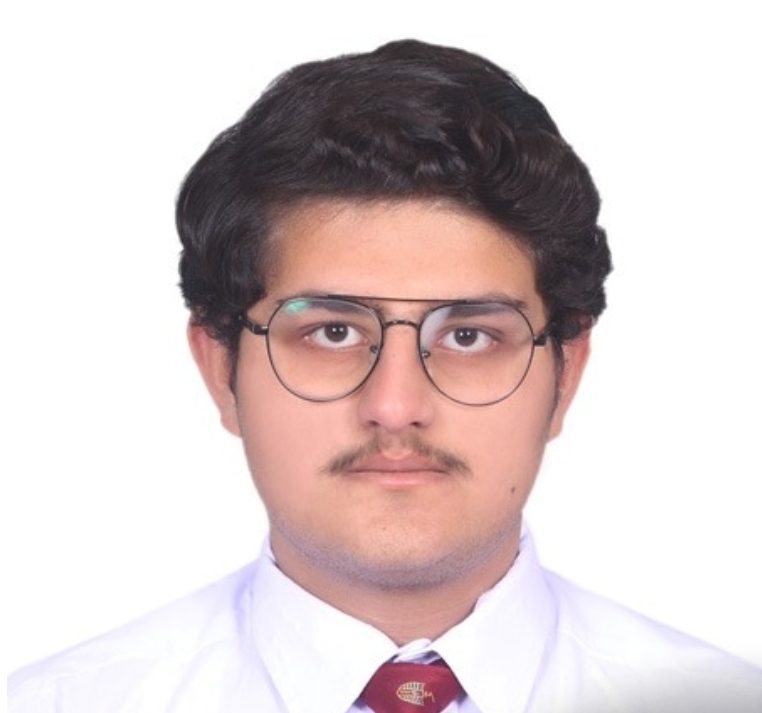
Zulqurnain Haider
BS International Relations
National Defence University, Islamabad
Islamabad:The story of the Pakistan-Iran relations in the past two years starts with the sort of sound that continues to shake both the capitals,the missiles flying in between a common border in January 2024. During some days of tension, escalation was horrifyingly realistic. But what came next was even more of an exception in this region, a conscious decision to withdraw, negotiate and re-establish. Since then until January 2026, there has been a silent but potentially significant attempt by Islamabad and Tehran to transform a relationship that is crisis-prone into a relationship that is managed.
The result of the 2024 border strikes was the immediate manifestation of just how narrow the border had become. Frontier militancy, especially of such organisations as Jaish-ul-Adl and the Balochistan Liberation Army, had once again plunged the state-to-state relations into perilous waters. Both parties were quick to appoint ambassadors and reestablish diplomatic services. It was a straightforward message that neither Pakistan nor Iran could see one security issue to determine the future of the relationship.
That is what was strengthened in April 2024, when a former Iranian president, Ebrahim Raisi, paid a high-profile visit to Islamabad. Eight MoU’s were signed and everything including trade and veterinary health to judicial cooperation was touched. It was not a great alliance, but it was an indication of an effort to institutionalize involvement instead of improvising each time tensions got heated.Even after the Israel Iran war and Pakistan’s diplomatic suppourt got a recognition from Iranian parliament and President Pezeshkian also paid a visit to show gratitude and strengthen bilateral ties.
Diplomacy had settled down to a more regular beat in the following year. Political consultations were again resumed with the 13th round of Bilateral Political Consultations in November 2025 when Pakistan Foreign Secretary Amna Baloch and Iran Deputy Foreign Minister Majid Takht-Ravanchi led the consultations. They were not ritualized gatherings. Authorities checked the work of the Joint Trade Committee and the Joint Economic Commission, paying more attention to practical than to rhetorical work. As early as January 2026, both ministries of foreign affairs were publicly recommitting themselves to the concept of neighborly relations, despite external pressures, including sanctions and regional competitions, still looming.
The same was the case with security cooperation: small, realistic, hard-experienced. The concept of a border of peace started to shift away as a slogan to become a mechanism. In late 2024, a historic deal was made between Military Liaison Officers being stationed in Zahedan and Quetta, which provided a direct line to de-escalate situations before they took off. As early as November 2025 this reasoning was extrapolated to the very top, when the Chief of the Pakistani Army, General Asim Munir, received Ali Ardeshir Larijani, the secretary of the Supreme National Security Council of Iran, at GHQ. The wording was direct, coordinated counterterrorism, there would be no tolerance of transnational spoilers but the door to cooperation was open.
Even at sea, the tone shifted. Participation of Iran in the Pakistan International Maritime Expo and Conference -including its own national pavilion- in Karachi in 2025 may have been merely symbolical. But the naval authorities were openly talking of complementary deterrence and common interest at the sea, which was no little candor in a relation that had hitherto been marked by distrust.
It is economics, however, which is to be the true test of this rapprochement. Having limited channels to banking and sanctions being hard and fast, the two nations have turned to commodity-based trade. It was a turning point with the revised Barter Trade Mechanism signed in October 2025. As per the new arrangement, Iranian petroleum and electricity can be exchanged in Iran by the choice of private consortia with long settlement windows that will allow traders time to breathe. Communities which long existed on the margins are gradually changing their everyday life through the border sustenance markets like Mand and Pishin.
The governments have both established a target of 10 billion dollars per annum of trade by 2029, which would have seemed a miracle some years back, though at least has frames in place. The most sensitive part of this puzzle is the Iran-Pakistan gas pipeline which has been blocked long. Still pending the danger of an 18 billion-dollar penalty, Pakistan in early 2024 took a decision that was more about legal risk than energy demand when it decided to permit the approval of construction of an initial 80-kilometer stretch to Gwadar. By January 2026, the out-of-court settlement is being pursued as Islamabad has invoked force majeure and is keeping the project alive as it navigates the realities of U.S. sanctions.
In addition to bilateral relations, Islamabad and Tehran have also established some common grounds in the multilateral level. Pakistan and Iran were among the few countries to make a joint appeal to Taliban to act verifiably against terrorist organizations and release frozen Afghan funds, joining China and Russia on the margins of the UN General Assembly in September 2025. Through the Shanghai Cooperation Organization, the two nations have been working together against what they term extra regional military intervention in South and Central Asia. These actions are indicative of a common perspective, made by geography as much as politics.
The combination of the time frame between 2024 and 2026 narrates not a tale of friendliness at first sight, but of intentional stabilization. The January 2024 missile crisis also revealed the speed with which the lack of trust may become kinetic. The next few months were different: a realization by each that the continuing hostility is a luxury each can do without. Pakistan and Iran have opted to engage rather than estrange each other step by step through diplomacy and security coordination and innovative ways of working around the economy.
That choice remains fragile. Long shadows are still cast by sanctions, militancy and regional power plays. However, on this occasion, the relationship is being run in a forward-thinking and not firefighting manner. In the event that this trend continues, the long-standing sections of volatile borders might become not so much a fault line as a point of connection, gradually, awkwardly, though with purpose.

Comments are closed.