
Agriculture, Industry, IT, and People-to-People Connectivity Declared Key Sectors in CPEC Phase-II

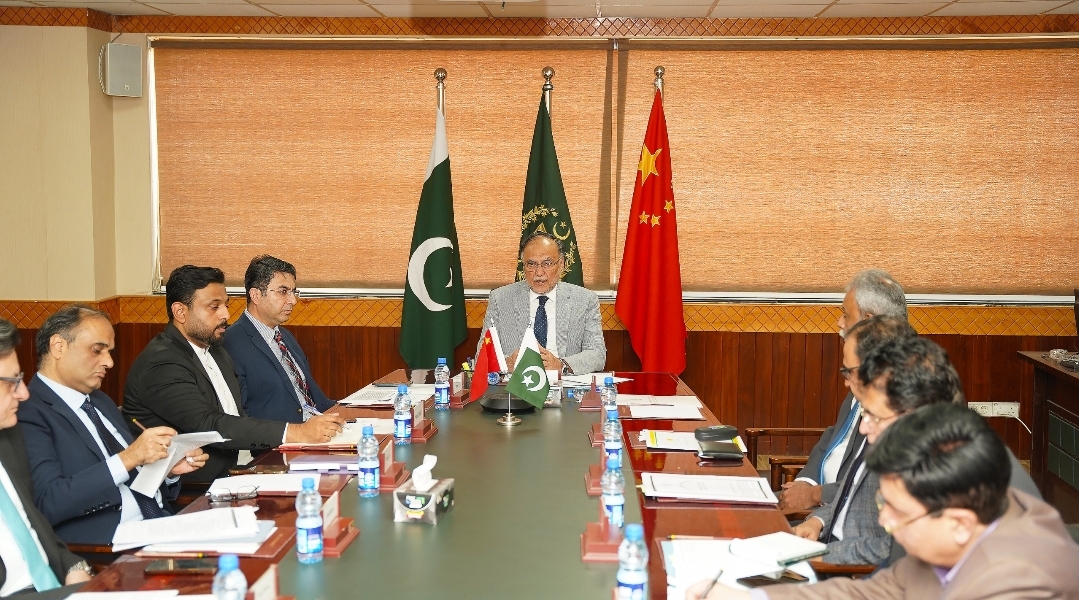
Islamabad: Agriculture, industry, information technology, and people-to-people connectivity have been declared as key sectors under CPEC Phase-II.
The first review meeting of CPEC was held in Islamabad following the 14th Joint Cooperation Committee (JCC) meeting. The meeting reviewed in detail the progress of CPEC Phase-II projects and set future targets.
Federal Minister for Planning, Development and Special Initiatives, Professor Ahsan Iqbal, stated that the second phase of the China-Pakistan Economic Corridor (CPEC) will mark a new era of sustainable growth in Pakistan’s economy, industrial development, and exports. He said that the JCC meeting has provided a new and stronger foundation for Pakistan-China relations, with special focus being given to public welfare and employment generation projects under Phase-II.
Ahsan Iqbal directed the relevant ministries to accelerate the preparation of new projects under CPEC Phase-II and ensure the timely provision of facilities in Special Economic Zones (SEZs) so that the benefits of development reach the common man. He emphasized that priority should be given to projects that have a lasting and positive impact on the lives of the people.
The 14th JCC meeting has laid the foundation for a new chapter in Pakistan-China relations, while the 15th JCC meeting will be held in Pakistan on the occasion of the 75th anniversary of diplomatic ties between the two countries.
Under CPEC Phase-II, the sectors of agriculture, industry, IT, and people-to-people connectivity have been included, with a special focus on strengthening the role of the private sector and equipping youth with technical skills.
Pakistan’s “Five Es” framework is being aligned with China’s “Five Corridors” to ensure continuity of development and to strengthen mutual cooperation.
CPEC projects are creating opportunities for employment, investment, and technology transfer, while Phase-II will significantly and sustainably increase Pakistan’s exports.
With China’s cooperation, the desalination plant established in Gwadar has considerably improved the water supply situation.
Just as CPEC Phase-I was successfully completed, the same spirit will be carried forward to make Phase-II equally successful.
The Federal Minister further stated that under the Economic and Employment Corridor, Pakistan has decided to adopt the Chinese model for the development of underprivileged areas.
He also informed that a Memorandum of Understanding (MoU) has been signed between Pakistan and China’s economic think tanks with the Development Research Center (DRC).
Through the cooperation of the DRC, Pakistan will gain valuable assistance in policy formulation and export promotion.

Comments are closed.