

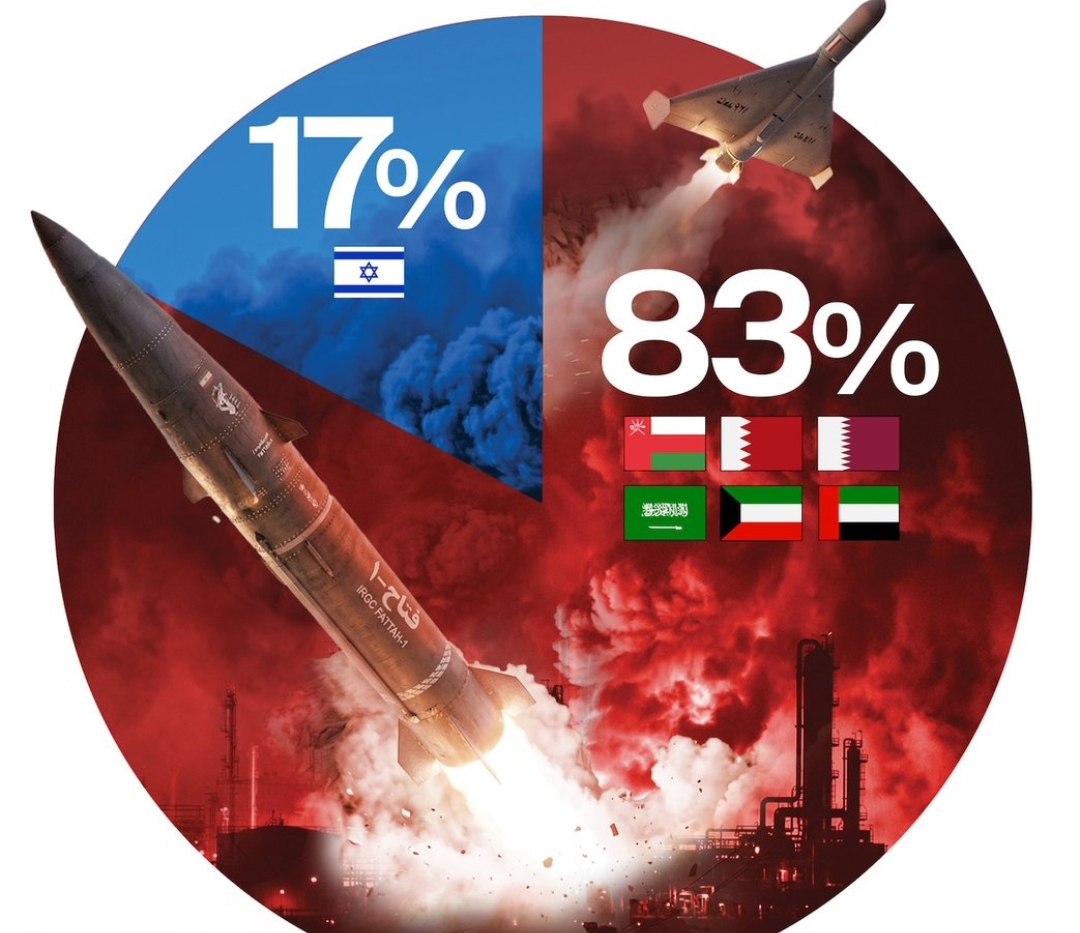
LONDON :The ongoing confrontation involving Iran, the United States and Israel has taken a widening regional turn, with Gulf nations absorbing the majority of retaliatory strikes, according to recent analysis and conflict data.
A detailed assessment shows that member states of the Gulf Cooperation Council (GCC) — Saudi Arabia, United Arab Emirates, Qatar, Bahrain, Kuwait and Oman — have borne approximately 83 percent of Iran’s missile and drone strikes since the conflict escalated on February 28.
In contrast, only 17 percent of such attacks have been directed toward Israel, highlighting a stark imbalance in the geographic distribution of hostilities.
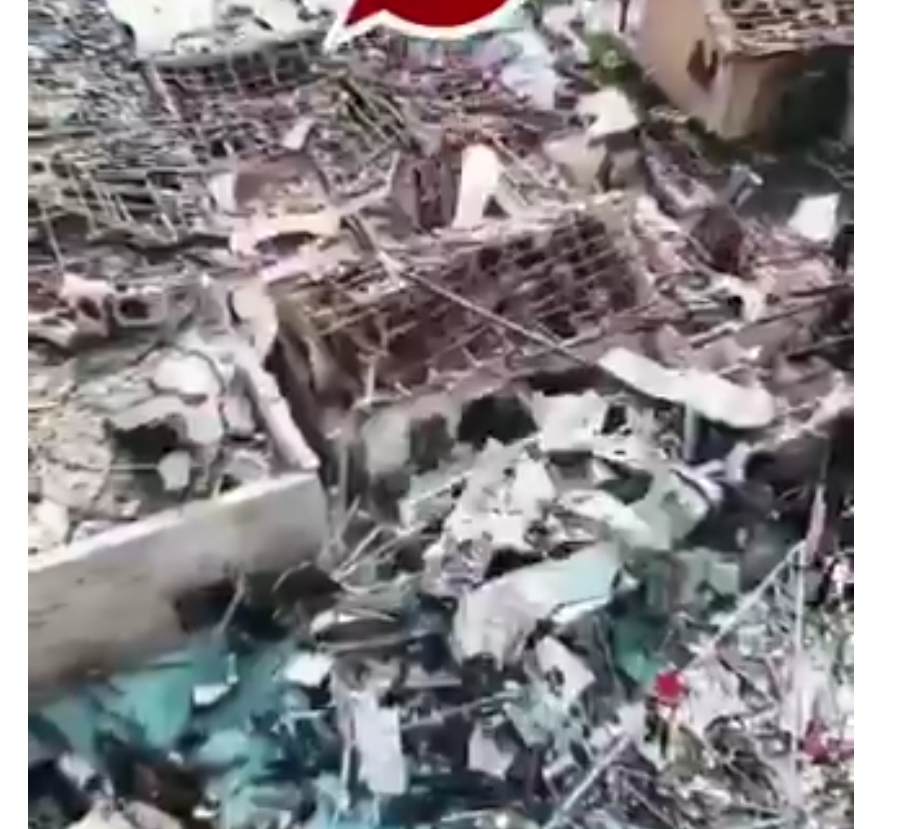
Despite not being direct combatants, GCC countries have found themselves at the center of the fallout. A report by the Stimson Center described the situation as an “escalating war that no GCC member sought,” emphasizing the unintended yet severe consequences faced by the region.
Since late February, approximately 4,391 Iranian projectiles — including ballistic missiles and armed drones — have targeted Gulf states, compared with around 930 launched toward Israel.
The data underscores a pattern where neighboring countries are disproportionately affected by a conflict largely driven by broader geopolitical rivalries.
Although Tehran maintains that its operations are aimed at U.S.-linked military installations, on-ground reports suggest a different reality, with repeated strikes impacting civilian and economic infrastructure.
In the UAE, falling debris from intercepted missiles has struck high-profile locations in Dubai, including the international airport, Burj Al Arab, Palm Jumeirah and Jebel Ali Port.
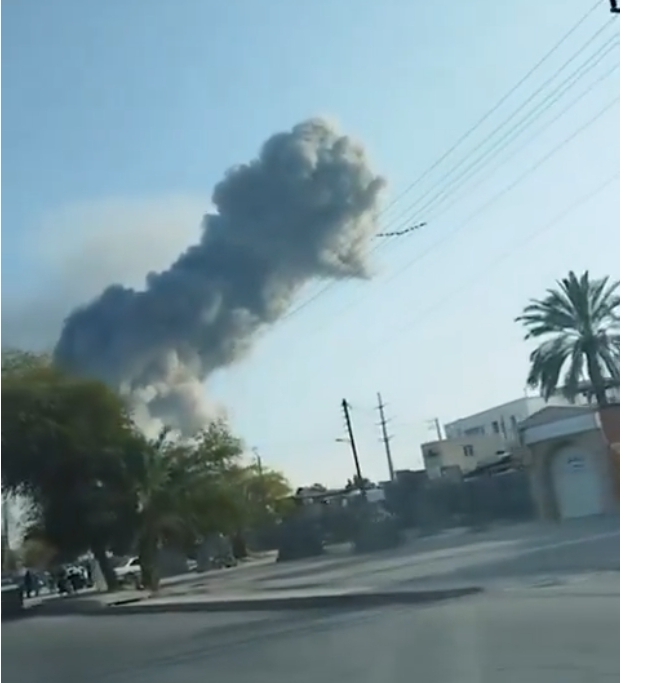
The UAE has recorded the highest number of attacks — more than 2,100 projectiles — resulting in at least 11 fatalities and multiple injuries.
In Saudi Arabia, critical energy infrastructure has been repeatedly targeted, including the Ras Tanura Refinery, facilities of Saudi Aramco and the Shaybah Oil Field. Air defense systems have intercepted numerous threats aimed at the capital, Riyadh, though casualties have still been reported.
Even Oman — which recently played a diplomatic role mediating talks between Iran and the United States — has faced multiple strikes on oil facilities and civilian sites, signaling the broadening scope of the conflict.
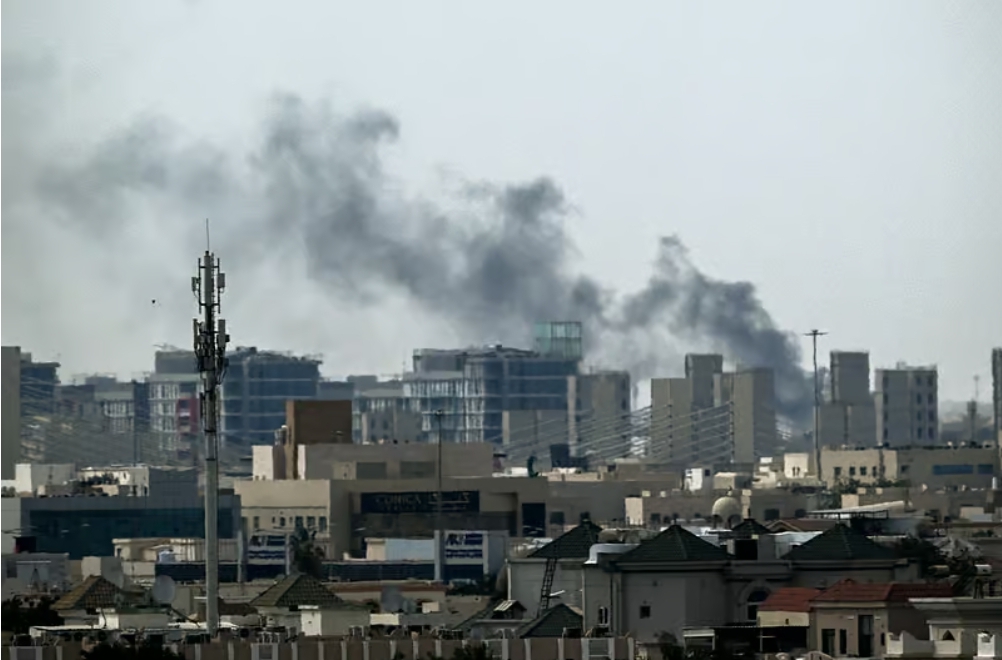
Eyewitness accounts from affected cities describe scenes of panic and uncertainty, with explosions and air defense activity becoming increasingly common in areas previously considered secure.
The psychological toll on civilians, alongside physical damage to infrastructure, is rapidly escalating.
Regional authorities warn that continued attacks on non-military targets could constitute violations of international humanitarian law, particularly principles concerning civilian protection.
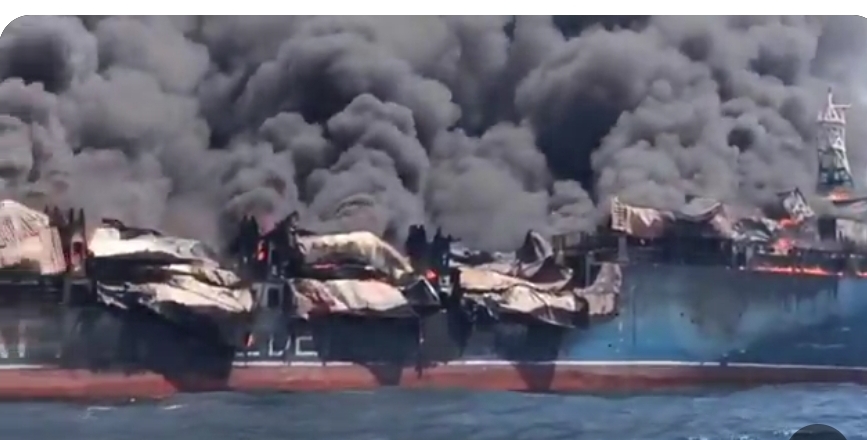
Experts suggest that Iran’s strategy may be aimed at widening the conflict’s geographic footprint to increase economic and political pressure on Washington and its allies.
According to analysts at the New Lines Institute and the Council for Arab-British Understanding, Tehran may be attempting to compel Gulf governments to push the United States toward de-escalation.
However, early indications suggest the opposite effect, with several GCC countries strengthening defense coordination and security ties with Washington.
The conflict has also raised alarms about the activation of Iran-linked proxy networks in the region, including Hezbollah, and the potential emergence of sleeper cells, further complicating the regional security landscape.
International Response and Legal Implications.
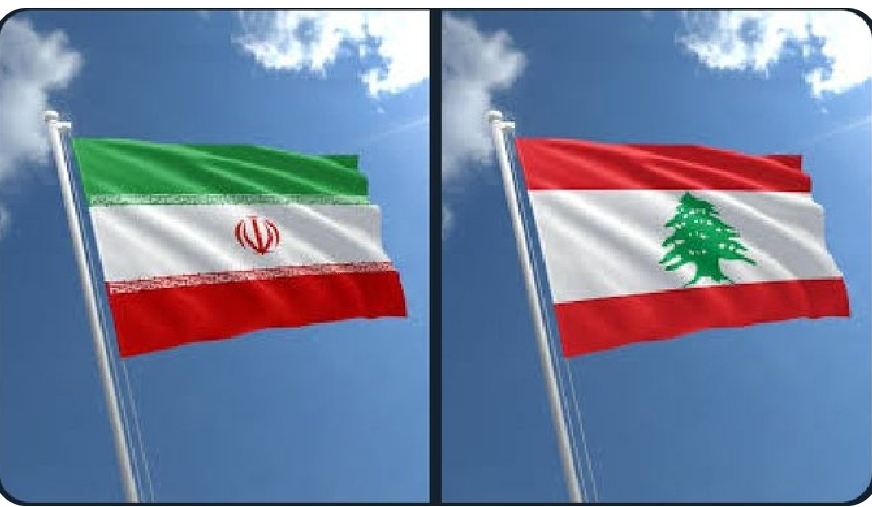
Diplomatic pressure on Iran has intensified at the United Nations Human Rights Council, which recently passed a resolution — backed by GCC states and Jordan — condemning the attacks and calling for accountability and reparations.
In a joint statement, GCC countries labeled the strikes a “flagrant violation” of sovereignty, international law and the UN Charter.
They reaffirmed their right to self-defense under Article 51 and signaled readiness to take “all necessary measures” to protect national security.
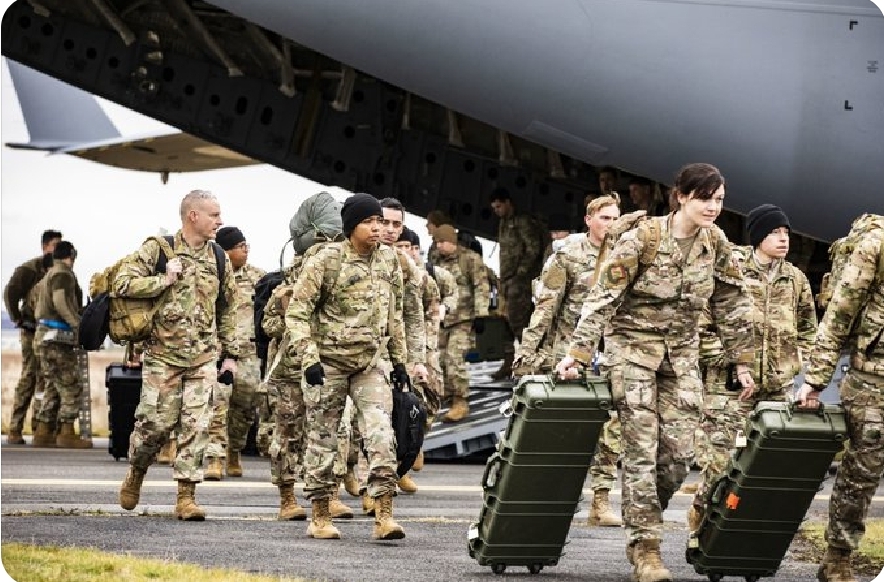
As the conflict continues, the disproportionate impact on Gulf nations raises urgent questions about escalation risks, regional stability and the effectiveness of international diplomatic efforts.
With civilian infrastructure increasingly in the crosshairs and alliances shifting, the Gulf region faces a complex and evolving security challenge that could reshape Middle Eastern geopolitics in the months ahead.
